
FAQ - KNX Actuators and Outputs

What is an actuator and what is it for?
Actuators are devices that produce a physical action on the controlled system by executing a command received from a control device. Generally speaking, they can be considered as the equivalent of electromechanical relays. Besides having a bus connection to the home automation system sending the commands, they also are connected to the powerline, i.e. the 230Vac electrical network powering the controlled load. For further information click here
Blind actuators: what are they capable of?
The blind actuator is generally used to control a motor for blinds, venetians and tents, in domestic environments.
What are the devices used to control scenes?
Other FAQs

FAQ
The CODESYS PLC executes a program and elaborates the digital and analog signals coming from sensors and meant for the actuators installed in a KNX plant.

FAQ
Ekinex AB1 and AG1 KNX power supplies provide the network voltage (SELV) to all KNX components.

FAQ
Ekinex proposes system equipment to be able are used to build an efficient communication infrastructure and allow the system integration in different environments.

FAQ
The Ekinex® actuator / dimmer is an S-mode modular KNX device for panel mounting, able to command and regulate the brightness of lighting devices.

FAQ
The ekinex® gateways are modular devices for mounting a framework. It used to exchange information with one or more slave devices, or with a master device communicate over a RS485 differential serial or Ethernet network.
FAQ
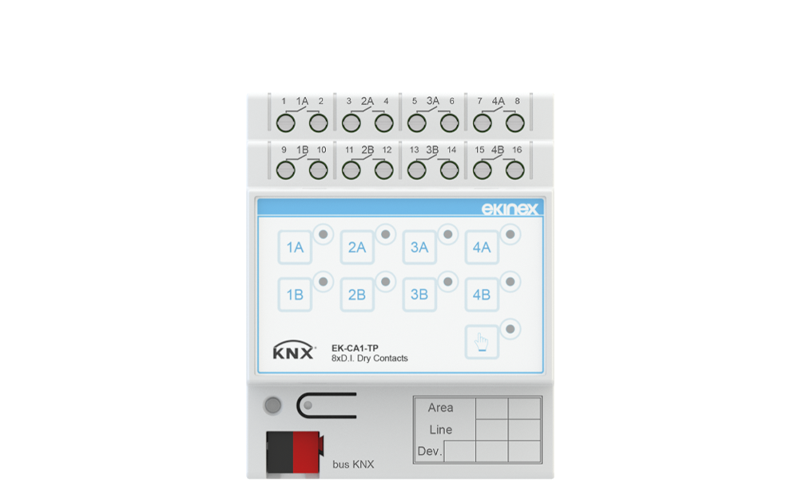
In a home automation plant, commands are often realized with pushbutton interfaces, commonly referred to as “spiders”, which are connected to traditionals rockers.
FAQ
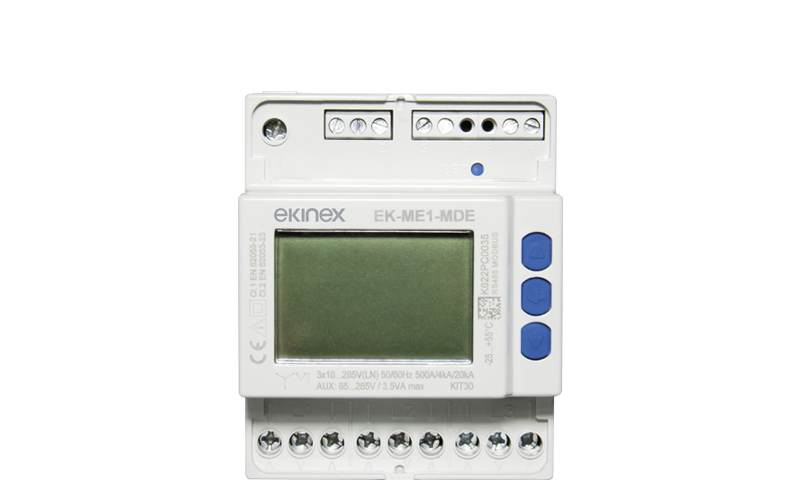
The Ekinex® metering products are divided into energy meters, communication modules and network analyzers.
.png)
FAQ
The Ekinex® products for temperature control are grouped in fancoil, electrothermal actuator and mixing group controllers.